January 6, 2024
Joanne Natale Spigonardo
In Italy the feast of the Epiphany on January 6 is considered one of the most important religious holidays. While the glitter of Christmas Day fades, Italy embraces the solemnity of the Epiphany with vigor. It is celebrated with Mass and family gatherings. Children receive gifts from the Befana, who is the good Christmas Witch. The true meaning of Christmas is not only the birth of Jesus, but the adoration of Him, His eternal manifestation and place in the world.
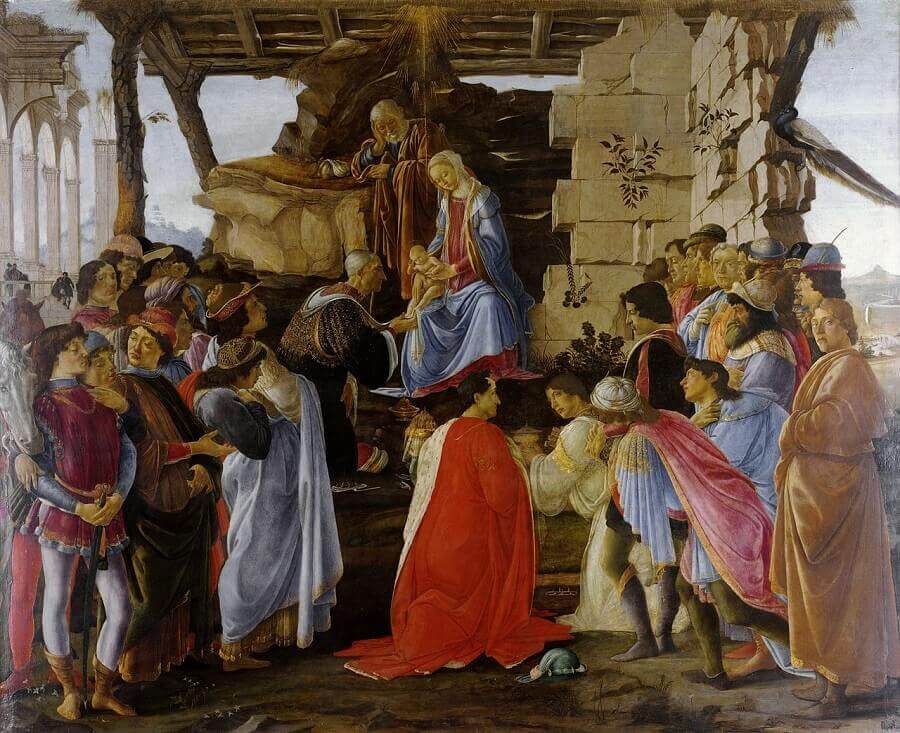
When I celebrate the Epiphany I think about the multitude of Italian paintings of the Adoration of the Magi. There are many versions but one of the most famous is by the Italian Renaissance artist Sandro Botticelli. The painting is currently on display at the Uffizi Gallery in Florence. Although the dates are not accurate it was painted around 1475. The painting was originally commissioned by Gaspare di Zanobi del Lama as the altar piece for his funerary chapel in Santa Maria Novella, Florence.
Botticelli executed several paintings about the Adoration, it could be as many as eight or more. This version depicts several members of the Medici family, notably Cosimo de’ Medici, the Italian banker and politician, he could be the Magus kneeling in front of the Virgin Mary and Jesus. Although there are varied opinions as to the identities of the other Medici figures, most art historians tend to agree that the painter, Sandro Botticelli, is the standing figure on the right of the frame, wearing the red gown.
Several masters have painted the Adoration of the Magi, one of them is Leonardo da Vinci. Leonardo was given the commission by the Augustinian monks of San Donato in Florence in 1481. He did not finish the work, as he decided to leave Florence for Milian leaving the painting behind. The unfinished work is also displayed in the Uffizi Gallery in Florence. There are other versions of Botticelli’s Adoration in the National Gallery in Washington, DC. Other similar paintings of the Adoration are also on display in Washington painted by Fra Angelico and Fra Lippi.
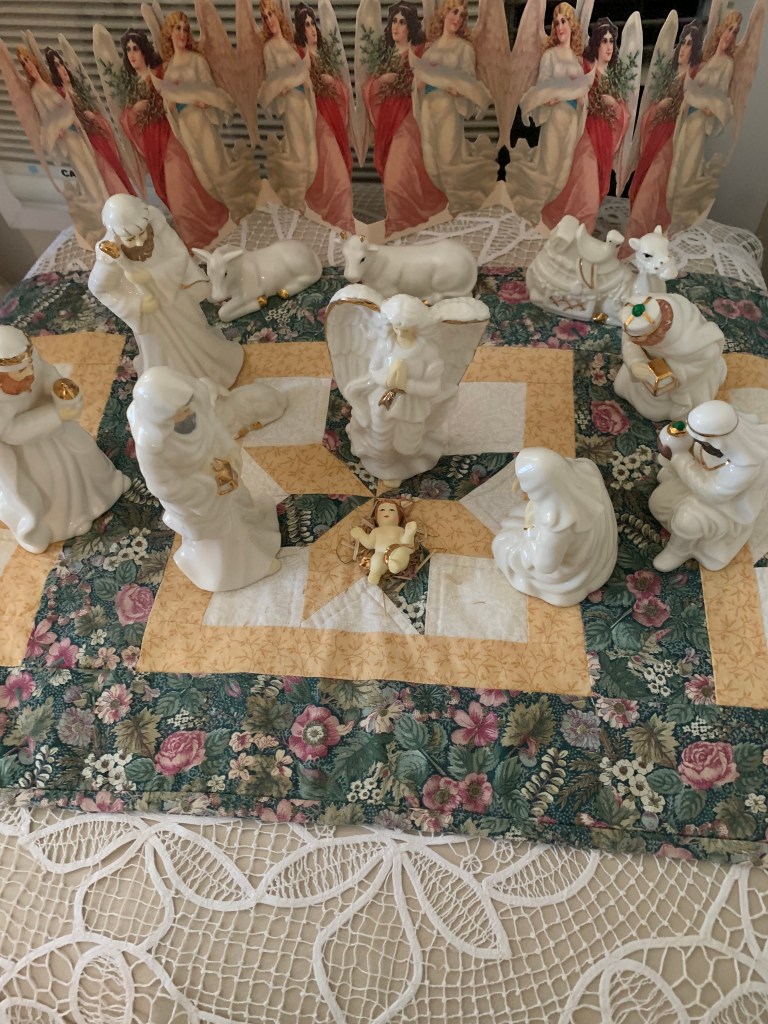
In this new year of hope and vitality, and for those of us that are Christian, we are reminded that Jesus is always in our hearts. Most Italian families have a Nativity display in their homes. Having these displays are traditionally and personally symbolic of the meaning of Christmas. The beautiful paintings of the Renaissance are a testament of our timeless faith in Christ. Happy Feast of the Epiphany!
About the Author:

Joanne Spigonardo has many years of experience in travel to Italy, Italian art, music, literature, film, history, wine, and cuisine. She is a lover of nature and beauty. She is an advocate for Italian immigrant women, and the author of White Widow, which is available on Amazon. https://www.amazon.com/White-Widow-Joanne-Natale-Spigonardo/dp/B085DT65DB. For more information about Joanne please visit her LinkedIn page: https://www.linkedin.com/in/joanne-spigonardo-b4824a9/.
 Hidden Treasures of Italy