Il Ragu di Natale

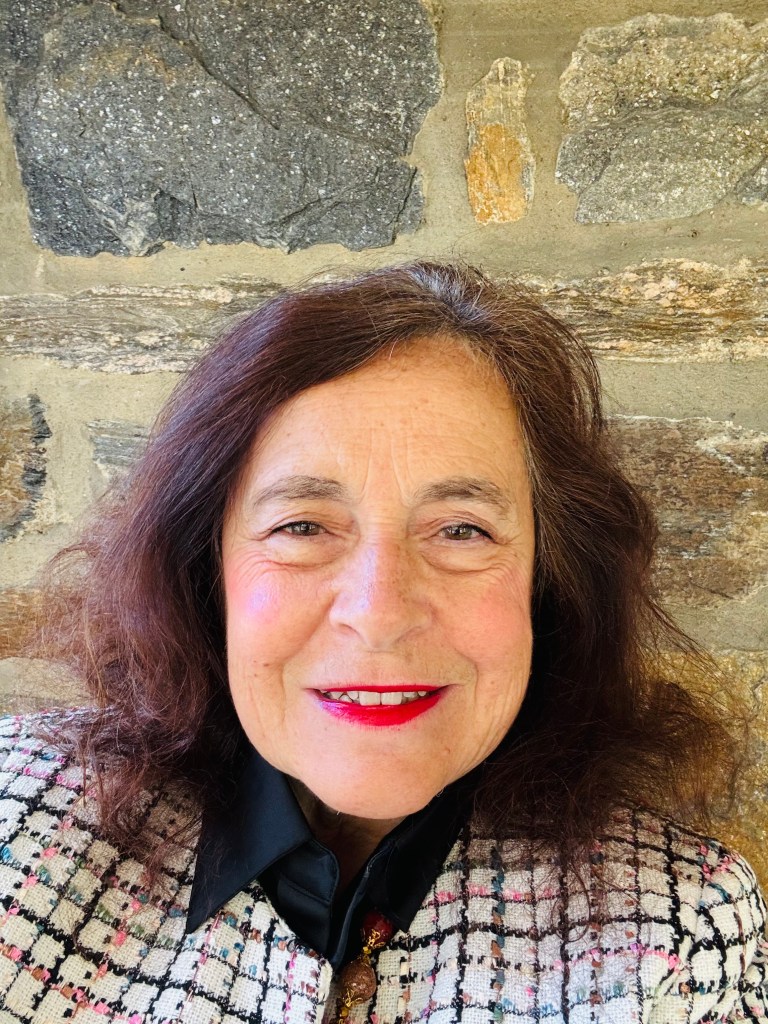
Joanne Spigonardo

December 9, 2025

If there is a snow storm before Christmas and you are stuck inside for the day, you should consider making the classic Italian Christmas Ragu. It is all about slow cooking and a meal that will be memorable and remain a part of your family traditions. It is an art form of slow cooking.
Braciole

There are some dishes that immediately evoke the warmth and joy of the holiday season. For many Italian families, that dish is the Christmas Ragu. This isn’t a quick weeknight sauce; it’s a labor of love, a rich, slow-simmered meat sauce that fills the home with an inviting aroma for hours and serves as the perfect centerpiece for a festive gathering.

In Italy, Christmas dining is deeply rooted in regional traditions, and while many families in the South observe the Christmas Eve “Feast of the Seven Fishes” without meat, Christmas Day is all about hearty fare. The ragu often takes center stage as the first course, typically paired with fresh pasta like pasta alla chitarra, tagliatelle or pappardelle, or used in a celebratory lasagna or cannelloni. What makes it special is less about a single specific recipe and more about the spirit of the occasion: using high-quality ingredients, taking time, and sharing it with loved ones. It’s a dish that emphasizes patience and togetherness, a true expression of love.

Pasta Alla Chitarra

Authentic Italian ragu is an art, not a science, and every family has its own revered recipe. However, some core principles make it the deeply flavorful dish it is the soffritto. The foundation of any great ragu starts with a finely chopped mixture of onion, carrot, and celery gently sautéed in olive oil until soft and fragrant. A blend of different meats adds complexity and depth of flavor. Common combinations include braciole, ground beef and pork, sometimes with the addition of sausage, pancetta, or even venison. The meat is browned thoroughly, which develops a richer flavor profile. White or red wine is used to deglaze the pot, simmering until the alcohol evaporates and the concentrated flavors remain. Slow simmering is the non-negotiable step. Ragu requires cooking over a low heat for anywhere from three to four hours to allow the flavors to meld and the sauce to thicken into a luxurious consistency. Use the best tomatoes, San Marzano are my choice.

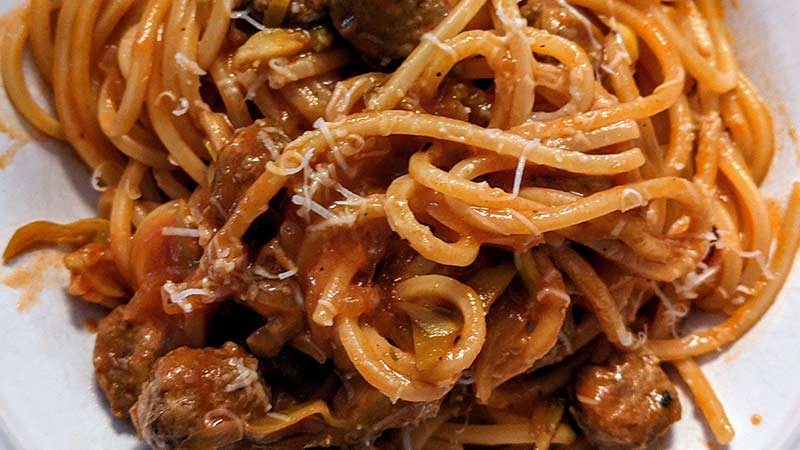
Meat Ragu

If you’re looking to start a new holiday tradition, an Italian Christmas Ragu is a fantastic choice. The ingredients are simple, but the process yields an extraordinary result. Here is my family recipe:

Mamma’s Christmas Ragu 

     Braciole:

  • 1.5 lbs thinly sliced beef top round or sirloin steak (about 6 slices)
  • 1 cup fresh breadcrumbs
  • 1/2 cup finely grated Pecorino Romano or Parmesan cheese
  • 1/3 cup finely chopped fresh parsley
  • 3 cloves garlic, minced
  • Salt and freshly ground black pepper
  • Kitchen twine or toothpicks 

For the Sauce:

  • Olive oil – 1/3 cup
  • 1 lb beef short ribs
  • 1 lb Italian sausage links
  • 2 medium bone-in pork chops
  • 1 large onion, chopped
  • Garlic, minced – 2 cloves
  • Tomato paste – 1 can
  • 1 cup dry red wine
  • 2 Cans Crushed and whole peeled San Marzano tomatoes
  • Water or beef broth – 2 cups
  • Bay leaves – 2 Bay Leaves
  • Dried basil and oregano – 1 tsp each
  • Salt and black pepper 1 tsp salt – ½ tsp pepper
  • Red pepper flakes (optional) – ½ tsp

Instructions:

  • Prepare the Braciole by combining breadcrumbs, cheese, parsley, and garlic. Season beef slices, spread filling, roll, and secure.
  • Brown all the meats (short ribs, pork chops, sausage, and braciole) in olive oil in a large pot and set aside.
  • Sauté chopped onion and minced garlic in the same pot.
  • Stir in tomato paste and cook, then deglaze with red wine, scraping up browned bits.
  • Add tomatoes, water or broth, bay leaves, basil, oregano, and optional red pepper flakes.
  • Return the browned meats to the pot, bring to a simmer, then cover partially and cook on low heat for 3 to 4 hours until the meat is tender.
  • Remove meats and bay leaves. Adjust seasoning of the sauce.
  • Serve the sauce with pasta – delicious with hand made pasta – purchased from Italian specialty store – like pasta alla chitarra – vermicelli – rigatoni – paccheri  – or the very best of your own homemade pasta.

Buon Natale – Eat – Drink & Be Merry~ Wishing you Health & Happiness in the New Year!

About the Author

Joanne Natale Spigonardo has many years of experience in travel to Italy, Italian art, music, literature, film, history, wine, and cuisine. She is a lover of nature and beauty.  She is an advocate for Italian immigrant women, and the author of White Widow, which is available on Amazon. https://www.amazon.com/White-Widow-Joanne-Natale-Spigonardo/dp/B085DT65DB.  For more information about Joanne please visit her LinkedIn page:  https://www.linkedin.com/in/joanne-spigonardo-b4824a9/.

All Saints Day in Italy

Joanne Natale Spigonardo

November 1, 2025

I have never had the pleasure of being in Italy on All Saints’ Day, but it is definately a bucket list item for future travels. As a little girl in Sountwest Phillly, we celebrated by attending Mass, and having family and friends to our home for dinner. We enjoyed Halloween the night before, and continued our festivities with a 5 course dinner and with many sweets for dessert on All Saints Day. The typical dessert my Mother would prepare was crostata di mele, a fantastic apple tart, as well as, the ever fabulous zepole.

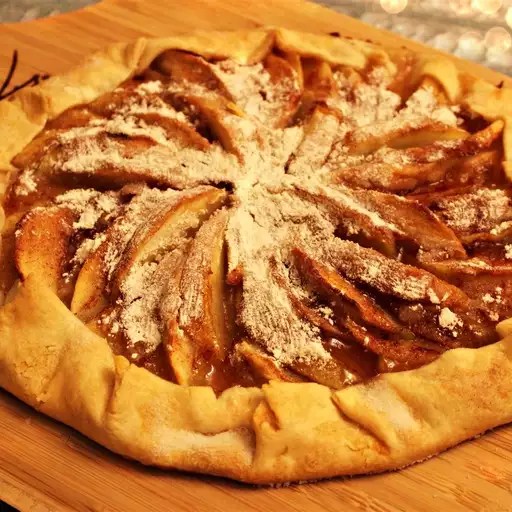
Crostata di Mele

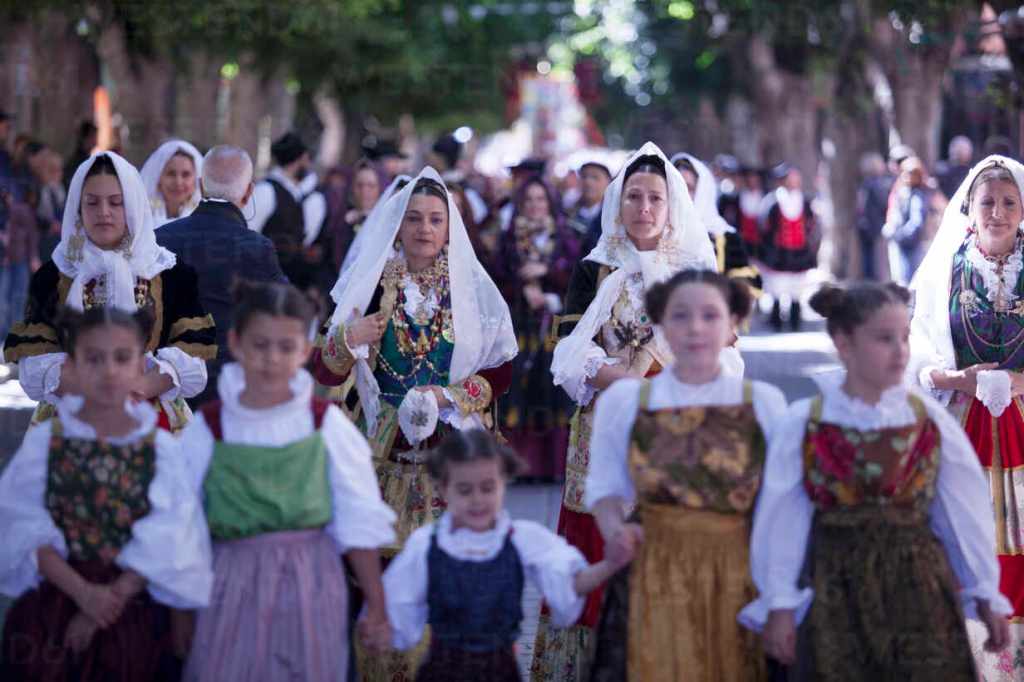
All Saints’ Day, known in Italy as Ognissanti or La Festa di Ognissanti, is a deeply significant national public holiday celebrated annually on November 1st. This solemn yet festive day is dedicated to honoring all the saints and martyrs of the Catholic calendar, both known and unknown. Its origins trace back to the early Christian Church, eventually being designated a universal feast day on November 1st by Pope Gregory III in the 8th century to commemorate the vast number of saints. Most businesses, schools, and government offices close, allowing families across the country to participate in religious services and family-oriented activities. Today, in many villages, a parade of saints is a beautiful tradition on All Saints Day. Women and children dress up as saints or in traditional fashions.

All Saints Day – Sardinia

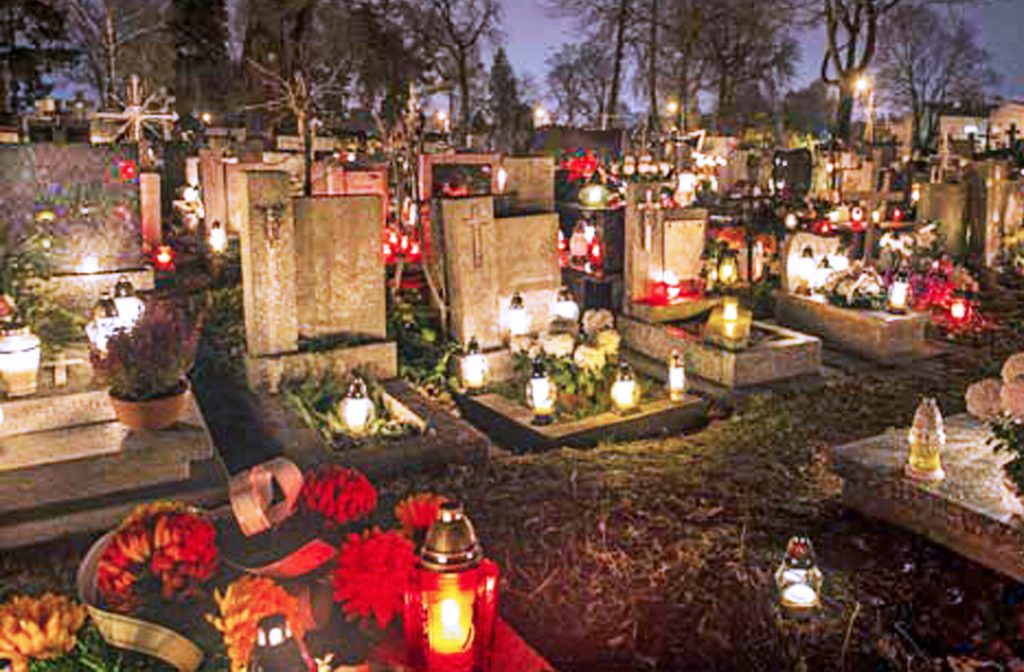
The holiday is intrinsically linked with the following day, November 2nd, known as Il Giorno dei Morti (All Souls’ Day or Day of the Dead), which is dedicated to remembering and praying for deceased loved ones. While All Souls’ Day is not a public holiday, the two days together form a period of profound remembrance and reflection on family, heritage, and the cycle of life. The most widespread and unifying tradition is the family visit to cemeteries, where Italians tend to and adorn the graves of relatives and friends with fresh flowers, most notably chrysanthemums, which are the traditional flowers of mourning and remembrance in Italian culture. Today our family honors our deceased by visiting the graves of our beloved family and friends on November 2nd.

Cemetery in Italy on All Souls Day

Regional traditions add a rich layer of diversity to the celebrations. In some areas, such as Piedmont and Valle d’Aosta, families maintain the ancient custom of setting extra places at the dinner table or leaving food and water out overnight for the spirits of the deceased who are believed to return for a visit. In Sicily, children receive special sweets, such as Frutta Martorana (marzipan shaped like fruits) or sugar statues, traditionally left by their deceased relatives as a sign of continuity and love.

Frutta Martorana – In Honor of All Souls

As we begin the holiday season and move toward Thanksgiving and Christmas, let us enjoy our early November holidays, by celebrating all the beautiful saints of Italy, and by remembering our beloved deceased. There is so much meaning to these timeless traditions, that deepen our love for the saints, and for all of our family and friends in Heaven.

About the Author

Joanne Natale Spigonardo

Joanne Natale Spigonardo has many years of experience in travel to Italy, Italian art, music, literature, film, history, wine, and cuisine. She is a lover of nature and beauty.  She is an advocate for Italian immigrant women, and the author of White Widow, which is available on Amazon. https://www.amazon.com/White-Widow-Joanne-Natale-Spigonardo/dp/B085DT65DB.  For more information about Joanne please visit her LinkedIn page:  https://www.linkedin.com/in/joanne-spigonardo-b4824a9/.

I Borghi Piu’ Belli D’Italia – Discovering Italy’s Hidden Treasures—The Most Beautiful Villages

Guardiagrele – Italian Village in Abruzzo

Joanne Natale Spigonardo

September 24, 2025

No one will ever contest the beauty of the most famous cities in Italy, namely Florence, Rome, and Venice. However there is a hidden Italy, a timeless world of ancient stone alleys, hilltop castles, and coastal retreats preserved in the pages of history. This is the realm of I Borghi più Belli d’Italia, “The Most Beautiful Villages of Italy”. For the seasoned traveler, that is looking beyond the usual and seeking the unexpected with authentic charm and a slower pace, exploring these meticulously preserved hamlets offers a glimpse into the heart of Italian culture.

Borgo, is a special and unique place and it is not just a village. It typically refers to a fortified, historic settlement that often dates back to the Middle Ages or Renaissance. These are places rich with cultural heritage, stunning architecture, and local traditions that have been passed down for centuries. There are approximately 400 of them in Italy. All of them are off the beaten path with artisans, century old customs, and simple pleasures.

The association of I Borghi piu’ Belli D’ Italia was founded in 2001. This organization was founded to promote and protect these smaller communities, which often exist outside the mainstream tourist circuits. The President of the association is Dr. Fiorello Primi. Visiting these villages is an exercise in slow travel. Unlike bustling cities, a borgo invites you to wander aimlessly through narrow alleys (caruggi), linger in quiet squares, and savor local flavors. The pace of life is relaxed, focused on tradition, and deeply connected to the surrounding land.

Dr. Fiorello Primi, President, I Borghi Piu Belli D’Italia

I would like to highlight three of the enchanting villages you could explore:

Nusco Province Avellino

Nusco, Province Avellino – My Home Town

I’ve written before about my hometown, Nusco, and I was so happy to see it listed as one of the most beautiful villages in Italy. I lived in Nusco until I was five years old before I immigrated to the US. I visited Nusco many times and it truly is a spectacular place, with its rolling hills, ancient buildings, exquisite cuisine, and treasures of joy, and it is a feast for the eyes. It is truly unspoiled from its natural state, it seems like it has remained in a capsule, insulated from the trappings of shallow urban life.

Castelmezzano, Basilicata
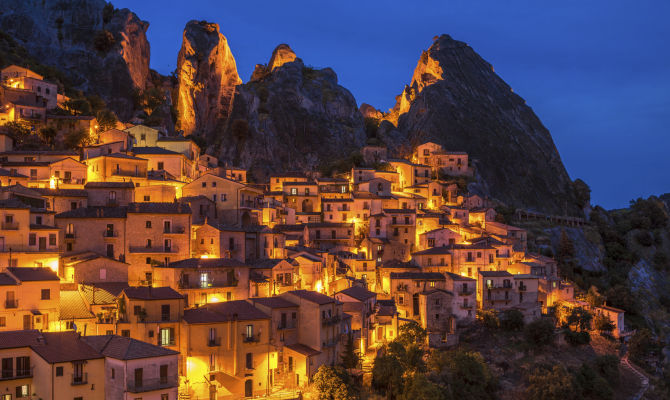
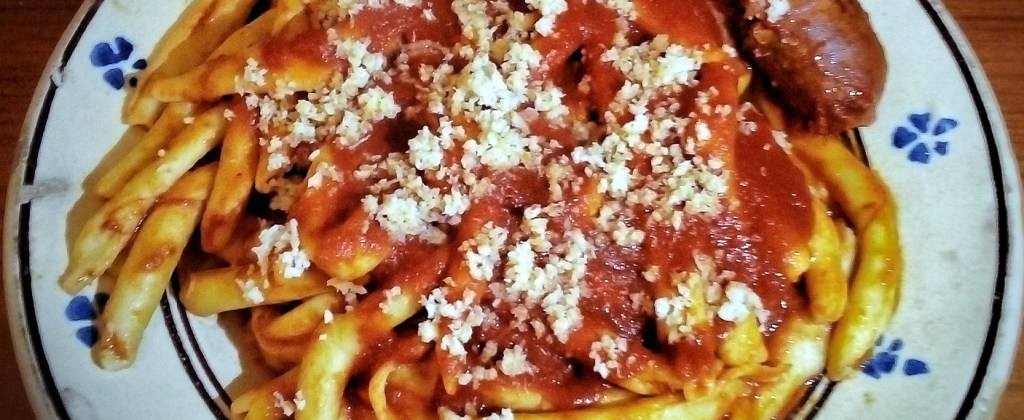
Nestled in the heart of the Lucanian Dolomites, Castelmezzano is a village built directly into the rocks. The village shines golden at night because of the type of stones used to construct the homes dating back to the 6th Century. Its houses cling to the mountain face, surrounded by dramatic, jagged peaks. The scenery here is truly breathtaking. It is known for its pecorino cheese and ferricelli pasta.

Castelmezzano, Basilicata
Ferricelli Pasta – Handmade in Castelmezzano, Basilicata

Guardiagrele in Abruzzo, Province di Chieti

Guardiagrele is known as “the terrace of Abruzzo” for its panoramic views, it is the seat of the Maiella National Park and a member of the “I Borghi più Belli d’Italia” (The most Beautiful Villages of Italy) club. The town is celebrated for its artisanal crafts, particularly metalwork, and is a gateway to the mountains, offering outdoor adventures and cultural experiences amidst its picturesque streets and ancient architecture.  It is also known for its delectable pastries.

Le Sise delle Monache-Traditional Pastries from Guardiagrele

If you are planning a trip to Italy in 2026, I hope you will take the roads less travelled and visit one of the beautiful borghi in Italy. You’ll find that these unique villages will remain forever in your heart, enriching your trip with a sense of preservation and meaningful travel.

About the Author:

Joanne Natale Spigonardo

Joanne Natale Spigonardo has many years of experience in travel to Italy, Italian art, music, literature, film, history, wine, and cuisine. She is a lover of nature and beauty.  She is an advocate for Italian immigrant women, and the author of White Widow, which is available on Amazon. https://www.amazon.com/White-Widow-Joanne-Natale-Spigonardo/dp/B085DT65DB.  For more information about Joanne please visit her LinkedIn page:  https://www.linkedin.com/in/joanne-spigonardo-b4824a9/.

Italian Opera – The Voice of Love

Piazza Della Signoria – Florence

Joanne Natale Spigonardo

August 31, 2025

In the 15th Century, Florence was the hub of the Renaissance, with many painters, poets, musicians, and intellectuals. Opera began there and was a means for the general public to express themselves in forms of dramatic songs that often depicted Greek Tragedies. If you close your eyes and imagine yourself in Florence’s Piazza della Signoria, you can almost see and hear early tenors and sopranos in their full dramatic roles, and performing Jacopo Peri’s Dafne.

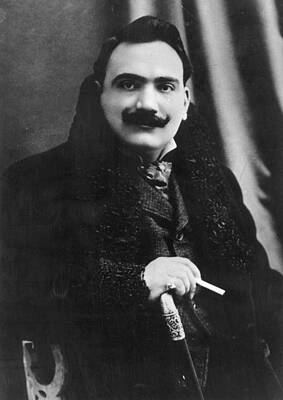
My first experience to opera was when I was a teenager and I would listen to the classical music my Mother would play on the radio. My Mother loved Enrico Caruso’s rendition of Mattinata composed by Ruggerio Leoncavallo. She told me it reminded her of beautiful summer mornings in Italy and of being young and in love. I continued listening every Sunday when she played the radio. My favorite opera during that time was La Triviata by Giuseppe Verde.

Enrico Caruso
Giuseppe Verdi
Violetta – La Traviata

La Traviata was first performed in 1853 at the La Fenice Opera House in Venice. The play features a French courtesan who is dying a lonely death by consumption. The opera is based on the novel by Alexandre Dumas called The Lady of the Camellias. The 1936 film Camille staring Greta Garbo is also based on the same novel.

For many years I had a subscription to the Opera Company of Philadelphia. I had the good fortune to enjoy many fabulous Italian Operas, for example Donizetti’s Lucia di Lammermoor, Puccini’s La Boehme, Madama Butterfly, as well as Turandot. In addition to many more Verdi operas, Aida, Il Trovatore, Un Ballo in Maschera, and many others.

Opera has become part of major motion pictures. La Boehme was featured as the romantic date between Loretta and Ronnie in Moonstruck. La Traviata was also featured as the romantic date between Vivian and Edward in Pretty Woman. Let’s not forget the countless times that the Barber of Seville’s overture is played as background music in classic cartoons. Opera is timeless and speaks about every man and woman. It is the voice of love.

One of my most poignant memories is when I met Luciano Pavarotti. At the time I was working for Alitalia Airlines. Alitalia was one of the sponsors of the Luciano Pavarotti International Voice Competition which was held at the Academy of Music in Philadelphia for many years. Alitalia was granted tickets to the event. I was seated right behind Pavarotti as he was judging the sopranos in the competition. At the time I was about eight months pregnant, and Pavarotti turned to me and greeted me and noted that I had a reason to be rotund but he had no reason. We had a good laugh. You could tell that he was a joyful person.

Luciano Pavarotti

I enjoyed Pavarotti’s performance in Rigoletto a few years before he passed, and will never forget our chance meeting. In my opinion, the best performance of Pavarotti’s life was in Turnadot where he sings Nessun Dorma and his high note singing Vincero, it’s the emotional and powerful song about a man going into a life and death battle for his love. Pavarotti was a true winner, he was a master of opera and his talent will always remain with us.

Italian opera speaks to the heart, the songs and the stories come from the soul. Italian opera epitomizes who Italians are, dramatic dreamers, creative thinkers, lovers of art and music.

About the Author

Joanne Natale Spigonardo

Joanne Natale Spigonardo has many years of experience in travel to Italy, Italian art, music, literature, film, history, wine, and cuisine. She is a lover of nature and beauty.  She is an advocate for Italian immigrant women, and the author of White Widow, which is available on Amazon. https://www.amazon.com/White-Widow-Joanne-Natale-Spigonardo/dp/B085DT65DB.  For more information about Joanne please visit her LinkedIn page:  https://www.linkedin.com/in/joanne-spigonardo-b4824a9/.

La Dolce Vita – My Favorite Film

Joanne Natale Spigonardo

July 30, 2025

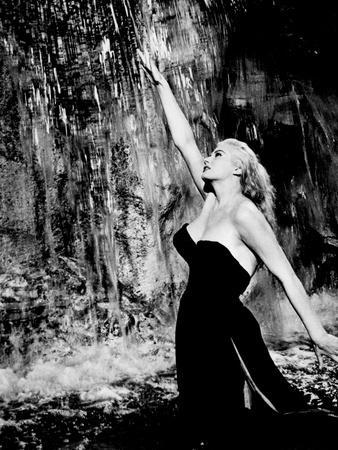
Anita Ekberg in the Trevi Fountain – La Dolce Vita

“La Dolce Vita”, directed by Federico Fellini is my favorite film of all time. I think I’ve watched it about 20 times. The first time I saw it was with my Mom. We would go to the Italian movie theater in South Philadelphia most Sundays. It was released in 1960, it follows Marcello Rubini, a gossip journalist in Rome, through a series of episodes over seven days and nights.

The film portrays Marcello navigating the city’s glamorous yet ultimately empty “sweet life” of high society parties, celebrity encounters, and fleeting romances, while struggling with his aspirations to become a serious writer. La Dolce Vita set the pace for fashion trends in the early 60’s, with the sophisticated elegant styles of Roman fashion.

Key themes explored in the film include the emptiness of pleasure, and good times, the search for meaning in a material world, and the impact of a burgeoning mass-consumer culture on post-war Italian society. The beautiful music throughout the film, has a melancholy tune that underlines the message of the film about a superficial lifestyle.

The iconic scene featuring Anita Ekberg in the Trevi Fountain symbolizes the film’s depiction of a glamorous yet ultimately shallow existence. The film also introduced the term “paparazzo” into the English language, referring to intrusive photojournalists, a reflection of the media’s influence on society that is depicted in the film. Media and how we are perceived in it is prevalent and how this perception distorts reality.

Throughout the film, Marcello faces moments of decision, including a brief encounter with a young girl (Paola) who represents a simpler, more innocent life, but he ultimately continues down the path of decadence and emptiness. The film’s conclusion, with Marcello unable to connect with Paola and returning to the party lifestyle, suggests his ultimate failure to find true meaning or fulfillment.

“La Dolce Vita” is considered a landmark film in cinema history for its stylistic innovation and exploration of contemporary societal issues, and it continues to resonate with audiences today due to its depiction of timeless themes about the human condition and the search for happiness and identity. I’m sure that I will continue to watch it again and again.

About the Author:

Joanne Natale Spigonardo has many years of experience in travel to Italy, Italian art, music, literature, film, history, wine, and cuisine. She is a lover of nature and beauty.  She is an advocate for Italian immigrant women, and the author of White Widow, which is available on Amazon. https://www.amazon.com/White-Widow-Joanne-Natale-Spigonardo/dp/B085DT65DB.  For more information about Joanne please visit her LinkedIn page:  https://www.linkedin.com/in/joanne-spigonardo-b4824a9/.

The Big Cheese – Parmigiano Reggiano

Joanne Natale Spigonardo

June 30, 2025

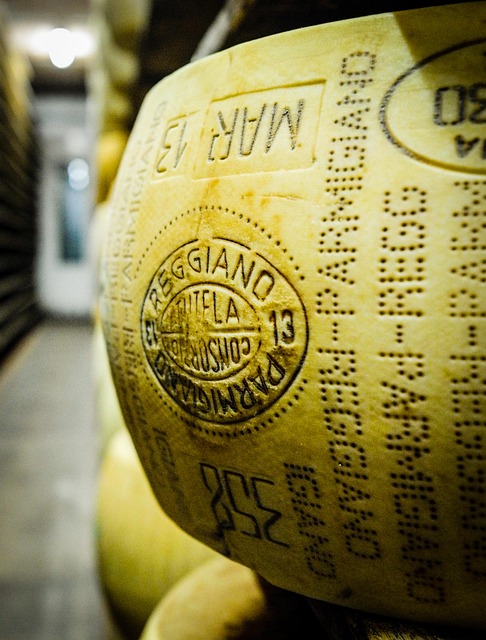
It’s not parmesan it’s Parmigiano, the authentic king of cheeses from Parma Italy. The heritage of Parmigiano Reggiano is a centuries old crafted cheese. It is an artform in itself. The unique taste is best savored on its own with a fine glass of dry red wine. Yes, there are wonderful cheeses world-wide, but really nothing beats the mouth-watering taste of Parmigiano Reggiano!

Making Parmigiano is an over one-thousand year old recipe discovered by the Benedictine and Cistercian monks in the Middle Ages. During a time of plagues and limited food sources aging cheese was life saving. The base recipe for Parmigiano is raw milk, salt and with fermented whey. Really it’s all about the cows. The cows that produce this milk are from local farms that are grass fed. They are happy cows that enjoy a stress-free life, and this is why the cheese is so delicious. Parmigiano is aged for at least 14 months and after it is formed into large wheels. It is natural and contains no artificial additives. To protect this prized cheese, a formal designation of origin was established in 1612. This was the beginning of the Protected Designation of Origin (PDO), which ensures the authenticity and quality of Parmigiano Reggiano today.

Don’t quibble about the expense, buy this wonderful cheese and you will instantly know that it is worth every penny. While grating Parmigiano Reggiano over pasta is a classic, its versatility extends beyond that. It can be enjoyed in chunks as a snack, paired with fruit, or drizzled with balsamic vinegar. It also works well in risottos, soups, salads, and many other dishes. Different aging periods offer distinct flavor profiles, allowing you to select the ideal cheese for any culinary creation.

Parmigiano Reggiano is not only delicious but also offers several health benefits. It is a good source of protein and calcium. The long aging process makes it naturally lactose-free. It is also rich in vitamins and minerals, including vitamin A, B12, phosphorus, and zinc. Also one ounce of Parmigiano is only 122 calories, so you can indulge in something delicious and healthy!

Parmigiano Reggiano is a true culinary treasure and a symbol of Italian tradition and quality. Its rich history, careful production, and unique flavor make it a cheese worth seeking out. When searching for a special cheese, choose Parmigiano Reggiano to discover why it is the King of Cheeses.

Make sure to grab a block of this cheese, and make sure that it authentic Parmigiano Reggiano. A true Italian grates fresh cheese always, yes it is an extra step, but so much better than pre grated cheese. Italian cooking is really using the very best ingredients, and one of the sayings in Italy is poco e buono – which means use a little but use the best. A little goes a long way when using the Big Cheese – Parmigiano Reggiano.

About the Author:

Joanne Natale Spigonardo has many years of experience in travel to Italy, Italian art, music, literature, film, history, wine, and cuisine. She is a lover of nature and beauty.  She is an advocate for Italian immigrant women, and the author of White Widow, which is available on Amazon. https://www.amazon.com/White-Widow-Joanne-Natale-Spigonardo/dp/B085DT65DB.  For more information about Joanne please visit her LinkedIn page:  https://www.linkedin.com/in/joanne-spigonardo-b4824a9/.

Una Buona Mamma Vale Cento Maestre – A Good Mother is Worth a Hundred Teachers – The Things my Mother Used to Say

Joanne Natale Spigonardo

May 7, 2025

Raffaela DellaVecchia Natale

Like all Mothers, Italian Mothers have their special remarks and sayings. There were so many poignant comments that my Mother used to say that are worth noting, especially in honor of Mother’s Day. Most of these phrases were actually Italian idioms from different regions of Italy. In the case of Italian idioms the words are worth a thousand images.

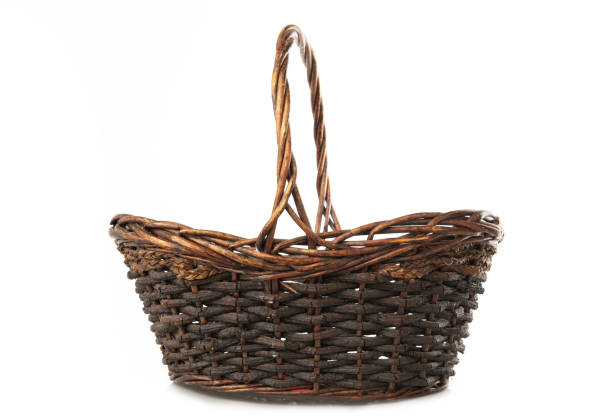
When I would tell my Mother that I was definitely going to lose weight, she would smirk at me and say – La canestra mantiene l’aqua? – which means does a basket hold water? In other words, a basket does not hold water – and I don’t believe you will lose weight. It’s not that she didn’t have faith in me, but she knew I couldn’t resist her amazing cookies, cream puffs, and cakes! She was also my soft ice cream connoisseur, and I was her accomplice. Our favorite treat of all treats was vanilla soft ice cream. It didn’t matter if it came from Dairy Queen, Mister Softee, or the fabulous Wana Frost – that we would get at Wannamaker’s every Saturday. So I guess the basket doesn’t hold water, but the memories are beautiful and rich.

Wicker basket Isolated on white

As my Mother was aging, I would accompany her to some of her friend’s funerals, and she would say you shouldn’t feel so bad about her, you know her husband will be fine – and then remark – quello chi muore, muore – quello chi rimana si sposa – which means the one who dies, dies – the one who remains gets married. We then would have to leave the services so that we didn’t break out in a fit of laughter. It’s not that she didn’t have sympathy, but she was just remarking on what her Mother and Grandmothers would say at funerals. These sayings last lifetimes. Like springtime flowers, these comments just pop up and I always savor them.

I accompanied my Mother several times to Italy in my teens and in my twenties. We would argue about the expense of the trip, but would always agree that we should go, not only to visit my Grandmother, and my Aunts and Cousins, but because we loved to travel, and we were partners in crime during those trips. She would say to me often during those trips, e meglio vivere un giorno da leone che cento da pecore – which means it’s better to live one day as a lion than a hundred like sheep – she would also say in Neopolitan dialect, quando hai un giorno buone ti la piglia – which means when you have a good day, you gotta grab it.

On our flight home from Italy, Mom would reminisce about our adventures and talk about them all the way home. She was Italy homesick for a few minutes, but then was so happy to get back to our family in Philly. She would remark how beautiful the places in Italy were but then would say – casa e dove il cuore e’ – which means, home is where the heart is.

Wishing you and all the Mother’s in the Universe a Happy Mothers Day, there is no greater gift than being a Mother!

About the Author

Joanne Natale Spigonardo has many years of experience in travel to Italy, Italian art, music, literature, film, history, wine, and cuisine. She is a lover of nature and beauty.  She is an advocate for Italian immigrant women, and the author of White Widow, which is available on Amazon. https://www.amazon.com/White-Widow-Joanne-Natale-Spigonardo/dp/B085DT65DB.  For more information about Joanne please visit her LinkedIn page:  https://www.linkedin.com/in/joanne-spigonardo-b4824a9/.

Pane di Pasqua – Easter Bread

Joanne Natale Spigonardo

April 12, 2025

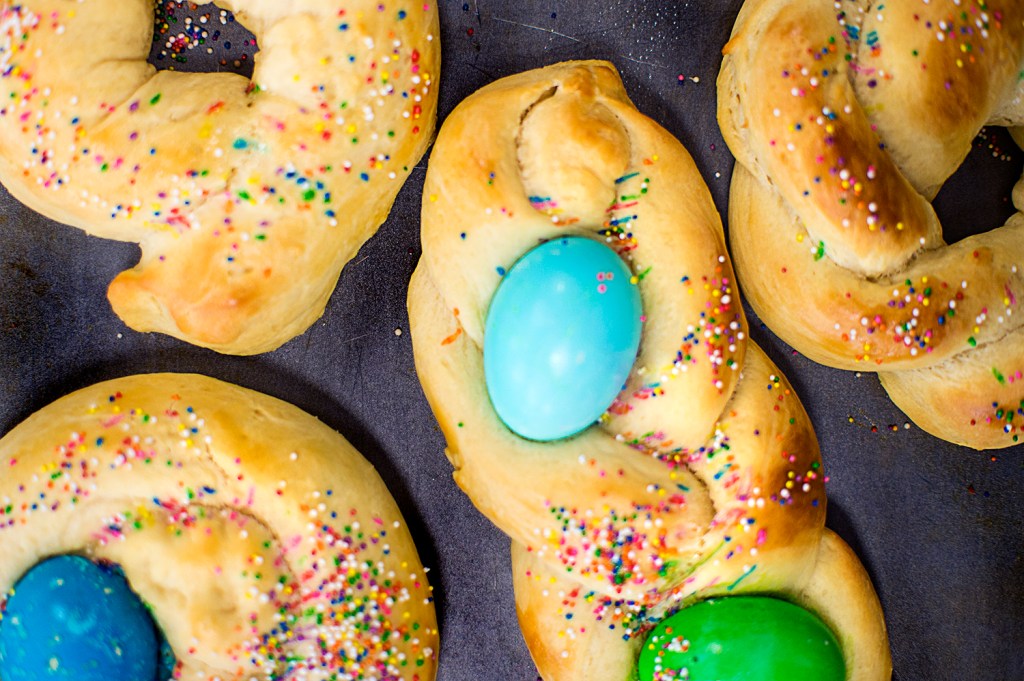
One of my fondest memories are the days leading up to Easter, when my Mother, Sister, and I would spend endless hours preparing the Easter ricotta pies, la pizza ripiena with sopressatta and basket cheese, and of course the wonderful Easter bread. The Easter bread would be in all shapes and sizes, we would mold wreaths, dolls, horses, and braids. It was so special and obviously so delicious.

The origins of Easter bread go back to ancient times when breads were baked to celebrate spring, to celebrate the earth coming back to life, with fertility and abundance. Bread has always symbolized life, sustenance and rebirth. As Christianity spread, bread was shared as a sign of the body of Christ, and the salvation of man. We can live without many things but we can’t live without bread. It really is part of our existence, I don’t care about the carbs. I honestly don’t know anyone that doesn’t love bread!

My Mother, Raffaela Natale, had a recipe that was actually published in The Philadelphia Inquire in the 1980’s. The article was called Not By Bread Alone. My Mother was interviewed and like many older Italian women, (now me), we don’t always measure everything. The recipe below is an approximation of her ingredients.

Pane di Pasqua

1 package 2-1/4 teaspoons rapid rise instant yeast

1-1/4 cup milk

1/4 teaspoon of salt

1/3 cup unsalted butter

2 large eggs, beaten

1/2 cup granulated sugar

1/2 cup raisins – golden are the best

1/4 cup citron

4 cups all-purpose flour (more as needed for dusting and kneading)

1 large egg, beaten with 1 teaspoon of water

6 dyed Easter eggs

Colored sprinkles

Instructions

Heat the milk and butter together. Combine the yeast, salt, eggs, and sugar, add the warmed milk and butter. Add 2 cups of the flour – knead the dough on a flat surface for about 5 minutes. Add the rest of the flower and continue kneading for about 20 minutes – add the raisins and citron and knead in. Mom never used a mixer when she made bread – it was all done with her strong hands and lots of love. Shape dough into a bowl that has been sprayed with cooking oil or greased with butter. Cover with plastic wrap and let it rise for one hour until doubled in size.

Divide dough into 12 long ropes. Braid ropes to form loaves and wreaths as desired. Place the shaped dough on a parchment-lined baking sheet, spacing the braided dough, so that it has enough room to rise. Loosely cover the baking sheet with plastic wrap and allow to rise for 1 hour, until it doubles in size.

Brush each braided bread or wreath with the beaten egg wash. Top with sprinkles, as desired. Gently place one dyed Easter egg in the center of each braided bread wreath or loaf.

Bake the bread at 350°F until golden brown, approximately 18-20 minutes. Quickly transfer the baked bread to a cooling rack.

I haven’t made Easter bread in a few years as I’ve been buying it at my favorite Italian bakery, Isgro Pastries in South Philly. Easter is one of the most popular holidays at Isgro’s. They have all types of amazing Easter breads, and ricotta pies.

Isgro Pastries – Easter Delicacies

While we are blessed with wonderful pastry shops in Philadelphia, a warm kitchen with family around always reminds me of my Mom, and the aroma of her amazing Easter bread. Nothing can ever top it in my mind, she was a master of cakes, breads and pies, and she was even published in the Inquirer. I hope you will try her recipe sometime.

Buona Pasqua, and enjoy your time with those you love, I hope you will create your own wonderful memories.

About the Author:

Joanne Natale Spigonardo has many years of experience in travel to Italy, Italian art, music, literature, film, history, wine, and cuisine. She is a lover of nature and beauty.  She is an advocate for Italian immigrant women, and the author of White Widow, which is available on Amazon. https://www.amazon.com/White-Widow-Joanne-Natale-Spigonardo/dp/B085DT65DB.  For more information about Joanne please visit her LinkedIn page:  https://www.linkedin.com/in/joanne-spigonardo-b4824a9/.

Italian Leading Women – Politicians, Stylists, Scientists, Artists, Educators and so Much More

Joanne Natale Spigonardo

March 6, 2024

March is international women’s month. So many Italian women to celebrate. The list is very long, and I am sure that your Mothers and Grandmothers should be on that list as well. Italian women are tough, intelligent and resourceful. They are creative, innovative, and kind. March 8th is International Women’s Day. In Italy it is usually celebrated by giving the important women in your life bunches of bright yellow mimosa. The most influential Italian women in my opinion, are Caterina de’ Medici, Rita Levi-Montalcini, Maria Gaetana Agnesi, Mother Cabrini, Catherine of Seina, and my beautiful mother, Raffaela Della Vecchia Natale.

Today, I would like to focus on Caterina de’ Medici. She was the daughter of Lorenzo de’Medici and Madeleine della La Tour de Aurvegni. She was born in the esteemed cultural landscape of Florence in 1519 but was married off to Henry the II, King of France at age 14. Although she was not known as a great beauty, but she is known as a great leader and artist. Upon her husband’s and son’s deaths, Catherine was Queen Consort and Queen Regent in France from 1547-1563. She governed political crisis, religious wars and economic strategies.

Caterina de’Medici – Queen Regent of France

Caterina Italianized France. She brought the art, cuisine, and style of Florence to France. She is known for bringing pasta, tomatoes, artichokes and chocolate to France. Caterina is known for her artistic designs of gardens, interior architecture, and general style. She introduced table settings, and beautiful eating utensils to France. You could say she was the Martha Stewart of her era, and so much more. Catherine was a powerhouse and a strategic politician as well.

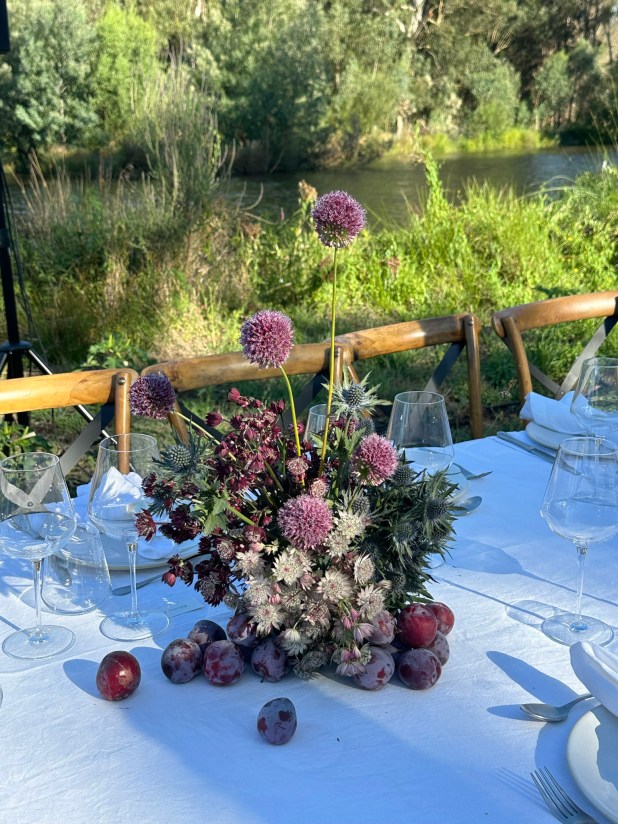
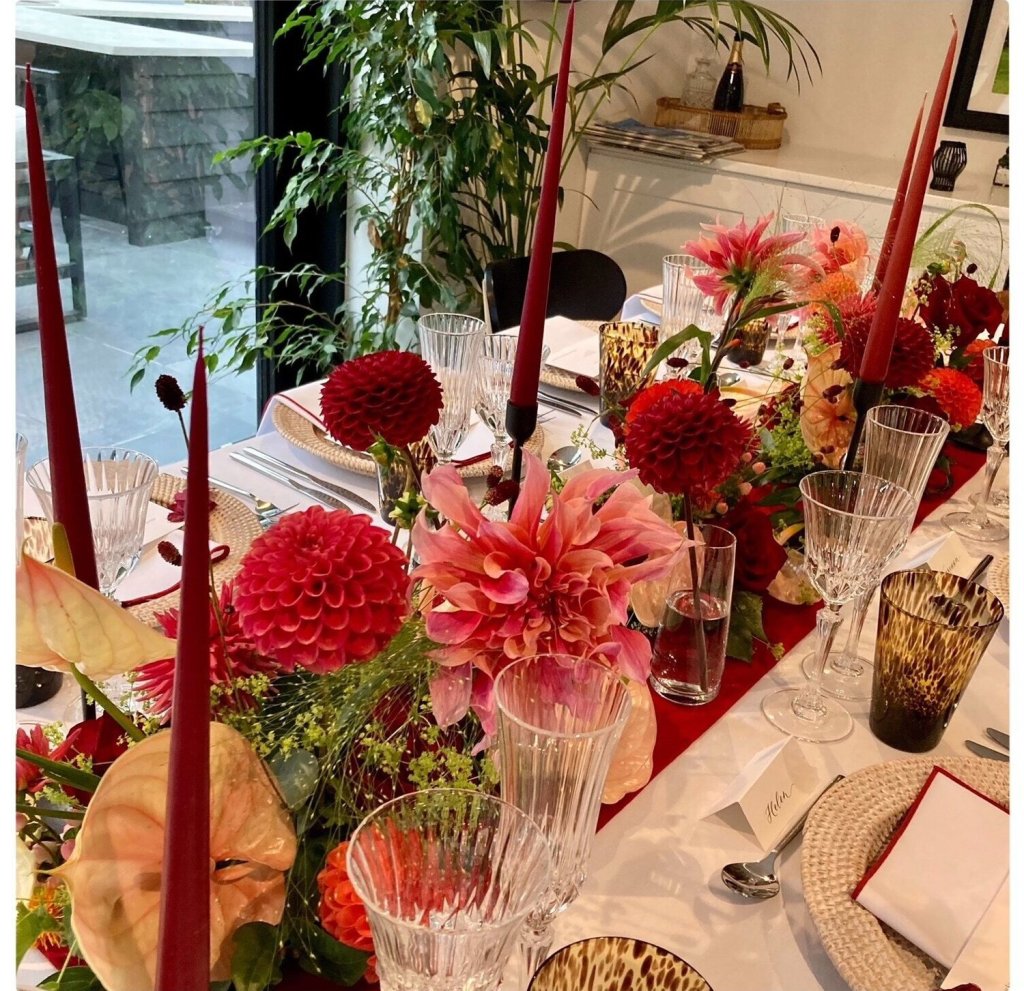
Home stylists today still use the designs of Caterina’s tablescapes. They are opulent, clever, full of color and are always show stopping. Her tablescapes have been featured in today’s magazines, and newspapers, for example Better Homes and Gardens and The New York Times.

Caterina de’Medici Tablescape Design
Caterina de’Medici Garden and Table Designs

Caterina was a renowned cook in her time, as well as today. She was known for her famous salad. It is still offered in restaurants today as the Insalata di Caterina. It includes fresh greens, tomatoes, pecorino cheese, and anchovies. You could say that it is related to the Nicoise salad that we all know.

Inspired by Caterina de’Medici – Salad Nicoise

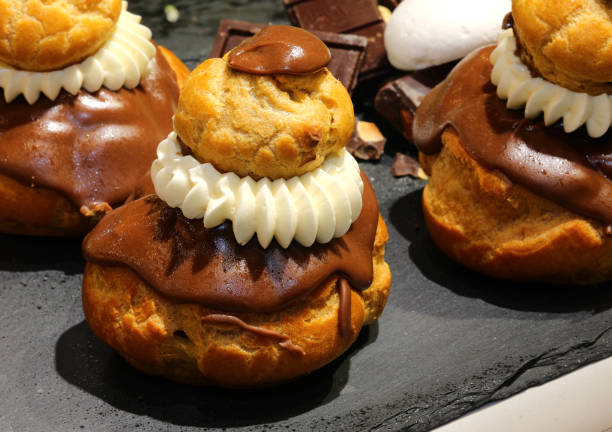
Besides her countless contributions to French and Italian cuisine, she was also know as one of the first pastry chefs. The famous French and Italian cream puffs or religieuse are attributed to her masterful talents with desserts.

Religieuse is a French pastry attributed to Caterina de’Medici

Caterina de ‘Medici is a true Renaissance Woman of the 16th century and also in today’s world. She is the modern woman, that is a strong leader, is versatile, artistic, and can multi-task. She had it all and did it all. Caterina is a true role model and a Queen in every way.

About the Author:

Joanne Natale Spigonardo has many years of experience in travel to Italy, Italian art, music, literature, film, history, wine, and cuisine. She is a lover of nature and beauty.  She is an advocate for Italian immigrant women, and the author of White Widow, which is available on Amazon. https://www.amazon.com/White-Widow-Joanne-Natale-Spigonardo/dp/B085DT65DB.  For more information about Joanne please visit her LinkedIn page:  https://www.linkedin.com/in/joanne-spigonardo-b4824a9/.

The Violin – An Italian Treasure

Joanne Natale Spigonardo

January 28, 2025

The Concert of Angels by Gaudenzio Ferrari – 1534

While the mandolin is probably Italy’s most famous instrument, it is the violin that put Italian music in the forefront of the world. The violin dates back to the middle ages throughout Europe and Asia. The first violin to be made in Italy was by Andre Amati in Cremona, in 1550. Amati’s violins are still in existence today. They are musical works of art. In the painting The Concert of Angels by Gaudenzio Ferrari, angels are adorning the gates of Heaven with ethereal perfection, this music was meant for a higher purpose.

Antonio Stradivari perfected the design in the late 1600s until his death in 1737. Stradivari was also from Cremona, thus Cremona is known as the violin capital globally. The Stradivarius violin is and always has been the most exceptional musical instrument. Fiorella Anelli a young violin maker in Cremona today upholds the standards set for her 500 years ago. She is one of the only female violin makers.

Fiorella Anelli- Violin Maker – Cremona

The word violin is derived from the latin word Vitula which means joy, and it is true that the violin has brought great joy through the many composers and artists that have included the violin through the ages. One of the most famous Italian violin concertos are the works of Vivaldi as depicted in the Four Seasons. Vivaldi’s masterpiece was cherished in his time, but by his death it was considered old-fashioned. Vivaldi’s music was rediscovered 100 years after is death and reached the greatest fame thereafter. Mozart and Vivaldi were not friends, but they both lived and died in Vienna.

Antonio Vivaldi – Francois La Cave – 1723

The word violino is synonymous with Niccolo Paganini. He was born in 1782 to become one of Italy’s most celebrated violists and composers. He is best known for is 24 caprices. He was known as the Devi’s Violinist because of his powerful and impactful scores. Paganini has inspired countless musical talents. He is buried in Parma, Italy.

Niccolo Paganini Portrait –
Delacroix 1832

Valentino Alessandrini is one of the most famous violists of the 21st century. He combines classical and pop music in his repertoire. He has worked closely with performers like Ed Sheeran, Il Volo, Andrea Boccella and others. While his work embraces the modern, he holds the classics close to his heart. One of his best performances is Nessun Dorma by Giacomo Puccini.

Valentino Alessandrini – San Remo – 2023

On one of these cold winter evenings, open a bottle of your favorite wine, and play some of Vivaldi’s Quattro Stagioni. It will set a special mood. In a world of stress and action, you will find it restorative. You will be transported by the violin into a world of tranquility, grace, and joy.

About the Author

Joanne Natale Spigonardo has many years of experience in travel to Italy, Italian art, music, literature, film, history, wine, and cuisine. She is a lover of nature and beauty.  She is an advocate for Italian immigrant women, and the author of White Widow, which is available on Amazon. https://www.amazon.com/White-Widow-Joanne-Natale-Spigonardo/dp/B085DT65DB.  For more information about Joanne please visit her LinkedIn page:  https://www.linkedin.com/in/joanne-spigonardo-b4824a9/.