Joanne Natale Spigonardo
February, 9, 2026
As Valentine’s Day approaches I think of famous Italian lovers and legends, and we all know that in Heaven, the Italians are not only the cooks by the lovers. Italians are notorious for passionate acts of love, both heart warming, and heart warning. Usually there is no middle ground for love, it is all or nothing.
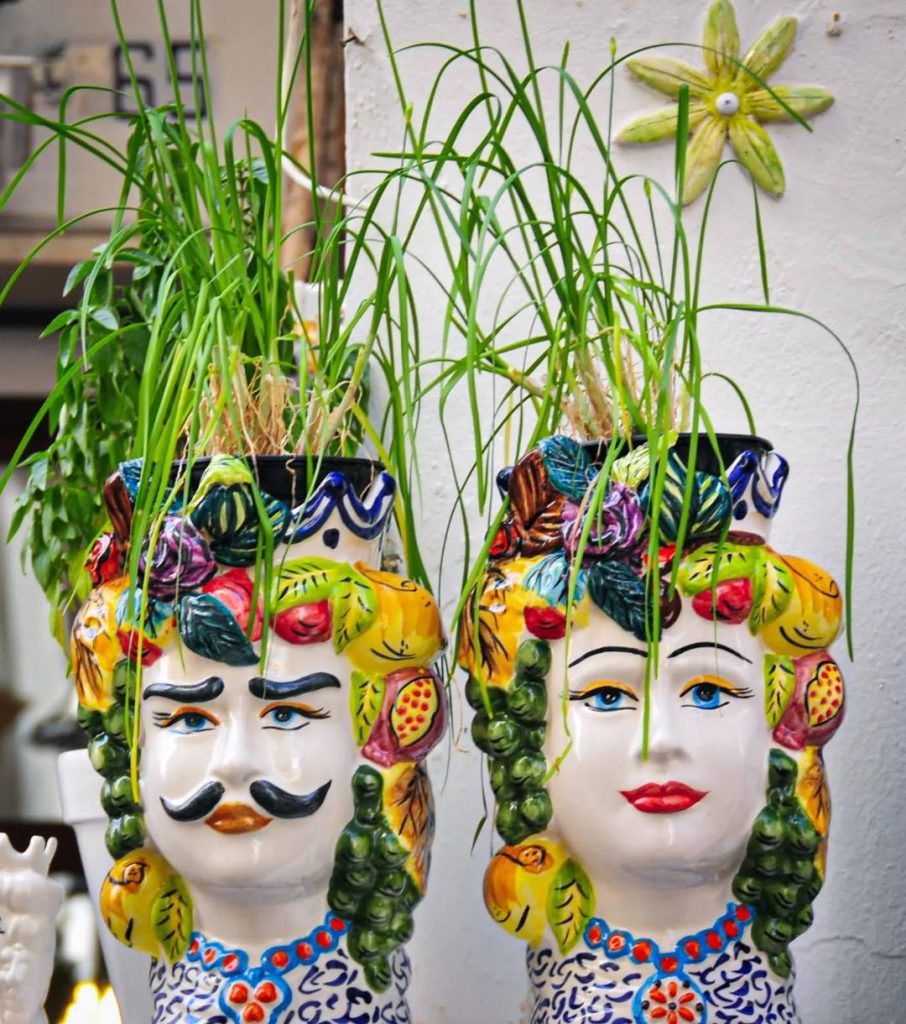
The last time I visited Sicily, I saw these amazing ceramics. Especially in Palermo and Taormina. One cannot help but notice a pair of eyes watching from balconies and garden walls. These are the Teste di Moro (Moor’s Heads), vibrant ceramic planters featuring a crowned male Moor and a noble female figure. They are sought after because they are steeped in antiquity. These artisanal masterpieces are far more than mere decoration; they are a haunting, beautiful representation of Sicilian history, blending Mediterranean passion, brutal romance, and artistic tradition.
The origin of the Teste di Moro is rooted in an austere 11th-century folk tale, set during the Arab occupation of Sicily (827–1091). The legend tells us that a beautiful young maiden lived in the Kalsa district of Palermo, and her pastime was spending her days tending to the plants and flowers on her balcony. Flowers and plants are a passion in every Italian home from past and present times. As she was tending her garden, a young Moorish merchant passed by, saw the girl, and was instantly captivated by her beauty. He declared his intense love for her, and she, charmed by his affection, quickly returned his feelings. Their romance was intense but short-lived. The girl soon discovered that her lover had not been entirely truthful, he had a wife and children waiting for him back in North Africa.
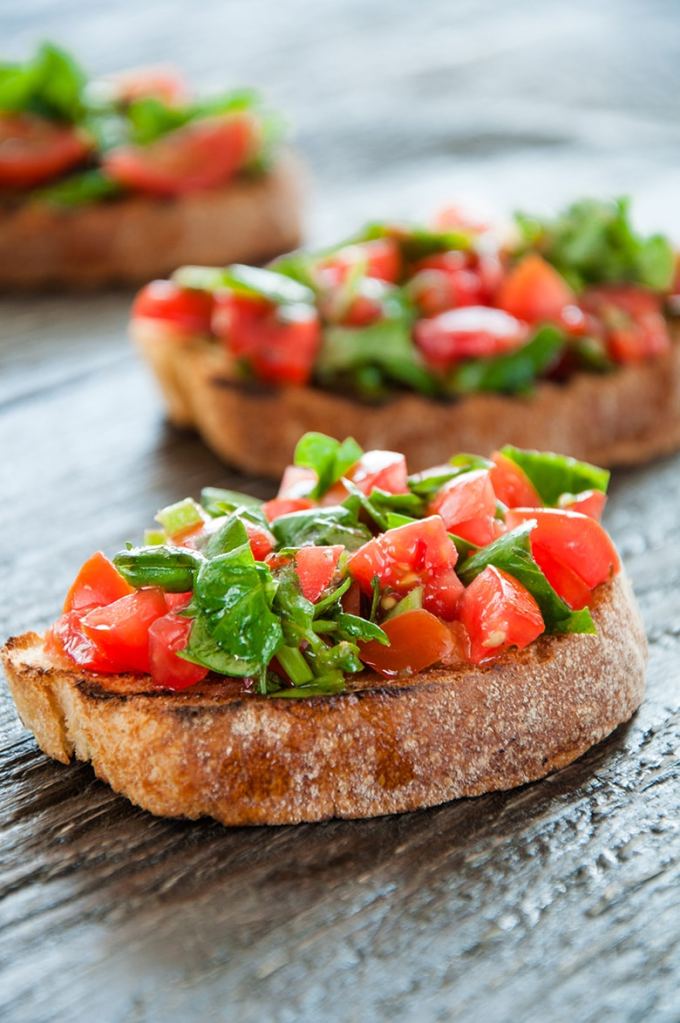
Consumed by jealousy, heartbreak, and a profound sense of dishonor, the maiden sought a brutal vengeance. She waited until her lover was asleep, killed him, and severed his head. To ensure he never left her side, she transformed his head into a pot, planting basil inside it—a herb traditionally associated with love and luxury. The basil grew lush and vibrant, nourished by her tears, attracting the envy of neighbors who eventually commissioned their own ceramic heads to emulate her display. While I was in Sicily, I suddenly found an aversion to basil, it didn’t last long, but I hesitated as I was sinking my teeth into a luscious basil encrusted bruschetta. I still ate it!
The Teste di Moro represent a complex tapestry of Sicilian culture. They are a visual reminder of the island’s tumultuous history, acknowledging the profound influence of Arab, Greek, and Norman cultures that converged in Sicily. Also, the heads symbolize the intense, often chaotic, emotions frequently attributed to Sicilian folklore—love, passion, pride, and dangerous jealousy. The crowns and decorations—often featuring citrus fruits like lemons and oranges—represent the fertility and abundance of the Sicilian land, adding a touch of opulent beauty to the underlying grimness of the tale.
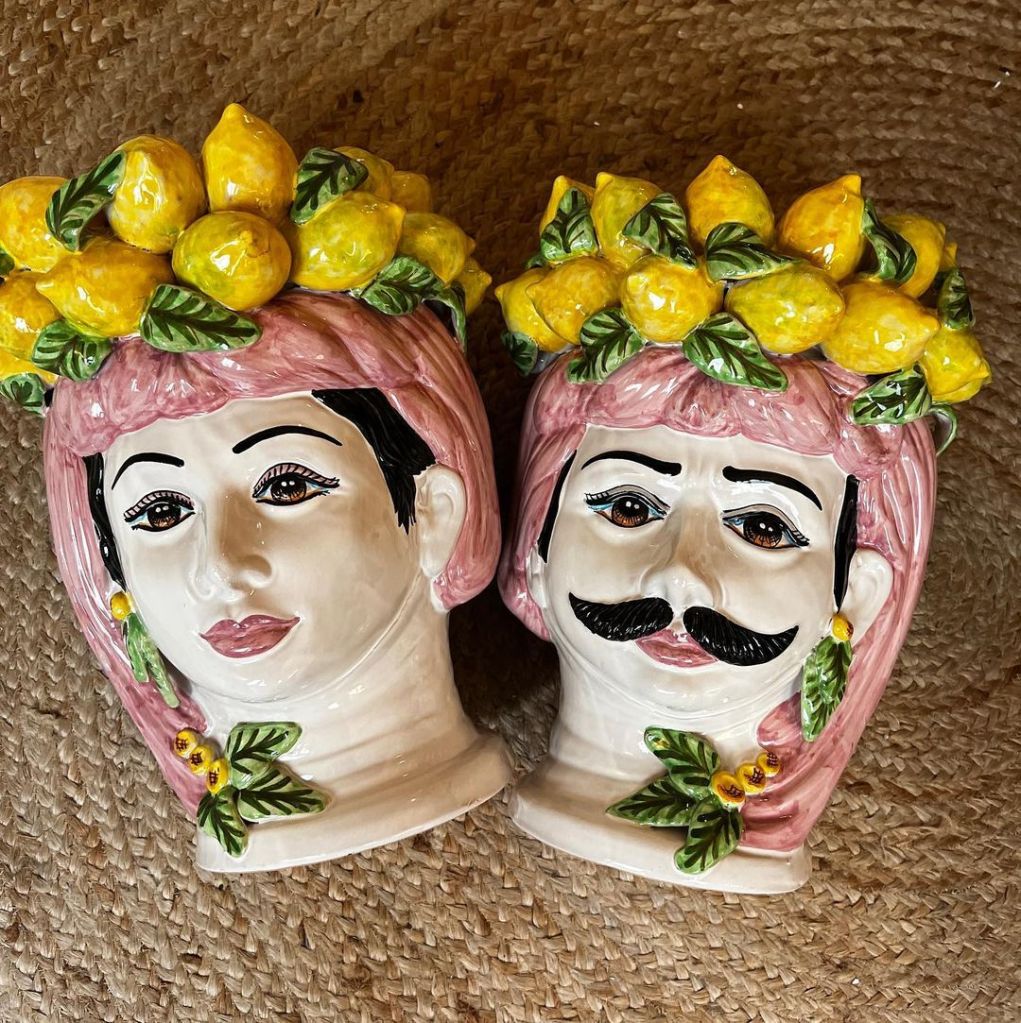
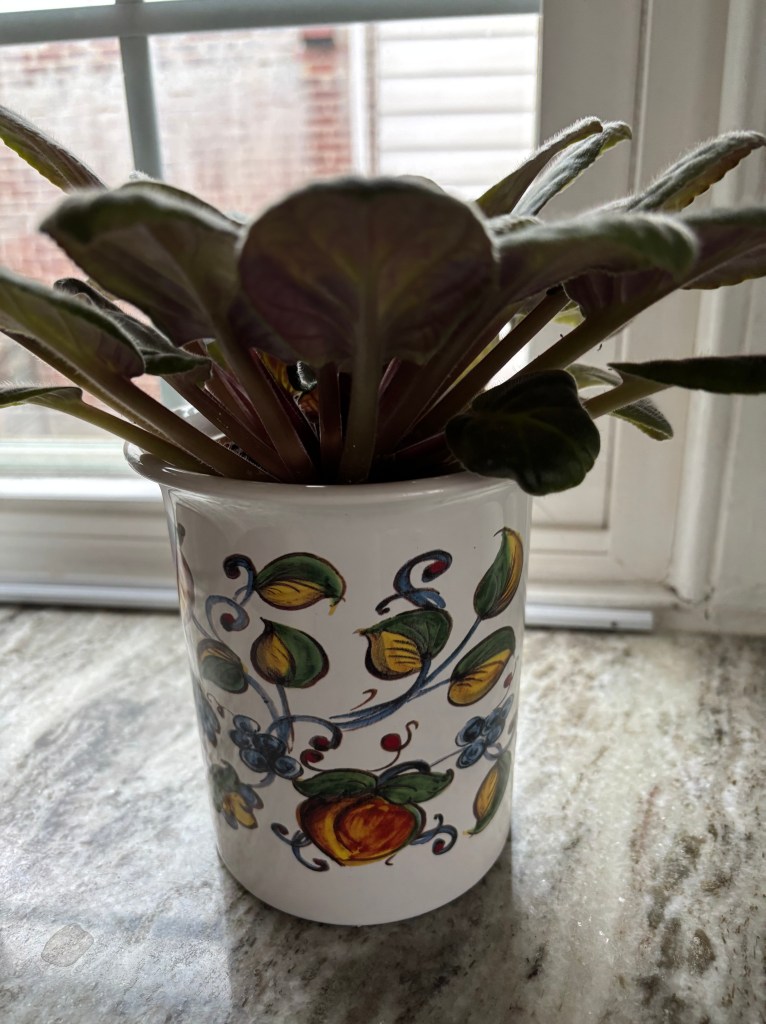
While historically rooted, the Teste di Moro have experienced a modern renaissance. They remain a staples of Sicilian home décor, found in luxury boutique hotels, private residences, and artisan shops across the island. For my windowsill, I prefer plain Sicilian pottery, no drama!
In John Keats’ poem “Isabella, or the Pot of Basil,” Keats reimagines the gruesome Sicilian tale, focusing on the tragic, romantic, and macabre elements, with a key quote highlighting the transformation of the head into a planter. Or in the HBO series The White Lotus, the character Daphne refers to the vases as a warning about infidelity: “It’s a warning to husbands, babe. Screw around and you’ll end up buried in the garden.” Really the head could end up anywhere even at your bar.
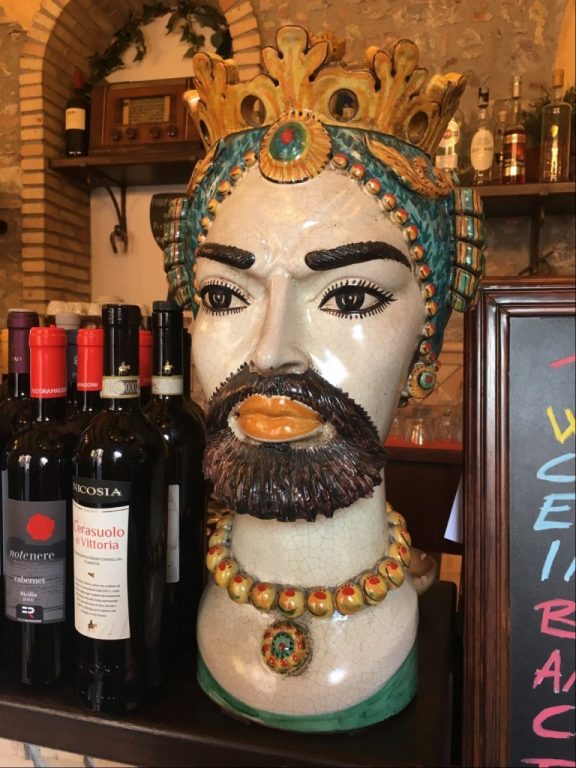
Teste di Moro are not mere plant pots; they are silent storytellers. They embody Sicilian myth and beauty with teeth that defines much of Sicilian art—a mixture of the exquisite and the grotesque, the romantic and the treacherous. When placed on a balcony, they are not only a welcoming sign of fertility but a lasting, vibrant monument to a tragic, timeless love story that continues to enchant residents and visitors alike.
Hope you have a timeless and wonderful love story, one that is forever joyful, with passion, and no drama! Wishing you a Happy Valentine’s Day!
About the Author

Joanne Natale Spigonardo has many years of experience in travel to Italy, Italian art, music, literature, film, history, wine, and cuisine. She is a lover of nature and beauty. She is an advocate for Italian immigrant women, and the author of White Widow, which is available on Amazon. https://www.amazon.com/White-Widow-Joanne-Natale-Spigonardo/dp/B085DT65DB. For more information about Joanne please visit her LinkedIn page: https://www.linkedin.com/in/joanne-spigonardo-b4824a9/.
 Hidden Treasures of Italy